
Tube Clustering

Project Information
- Category: Data Science & Machine Learning
- Type: Clustering Project (EDA → Modeling)
- Status: Completed
- GitHub: View Repository →
Python Pandas Numpy Seaborn Matplotlib Scikit-learn K-means Hierarchical Clustering (Ward)
Industrial Performance Optimization via SKU Clustering
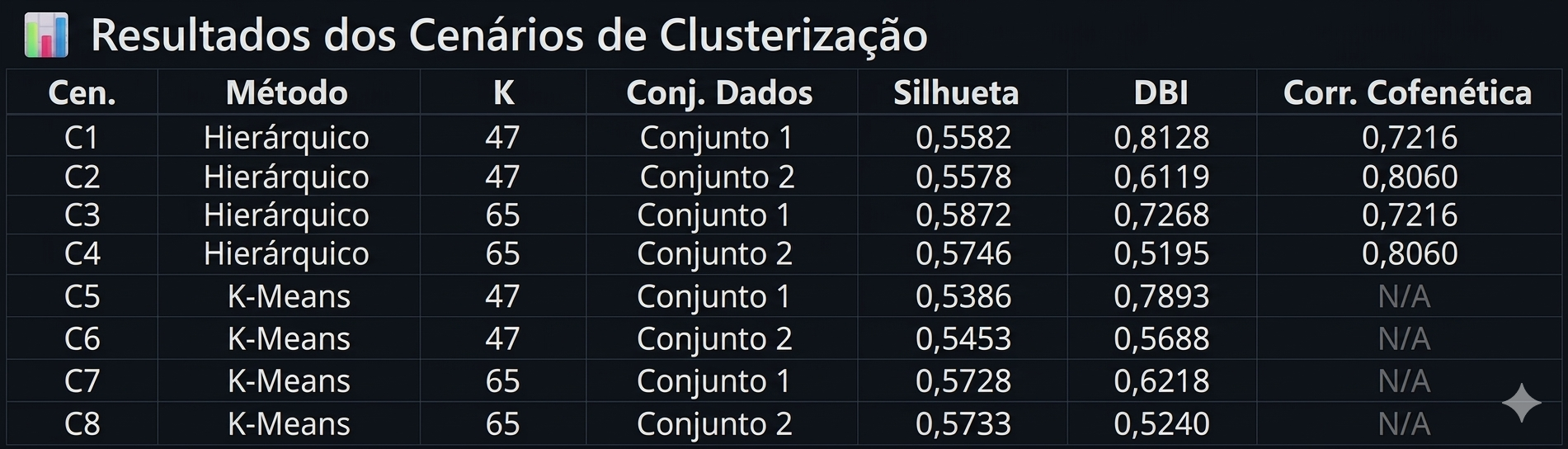
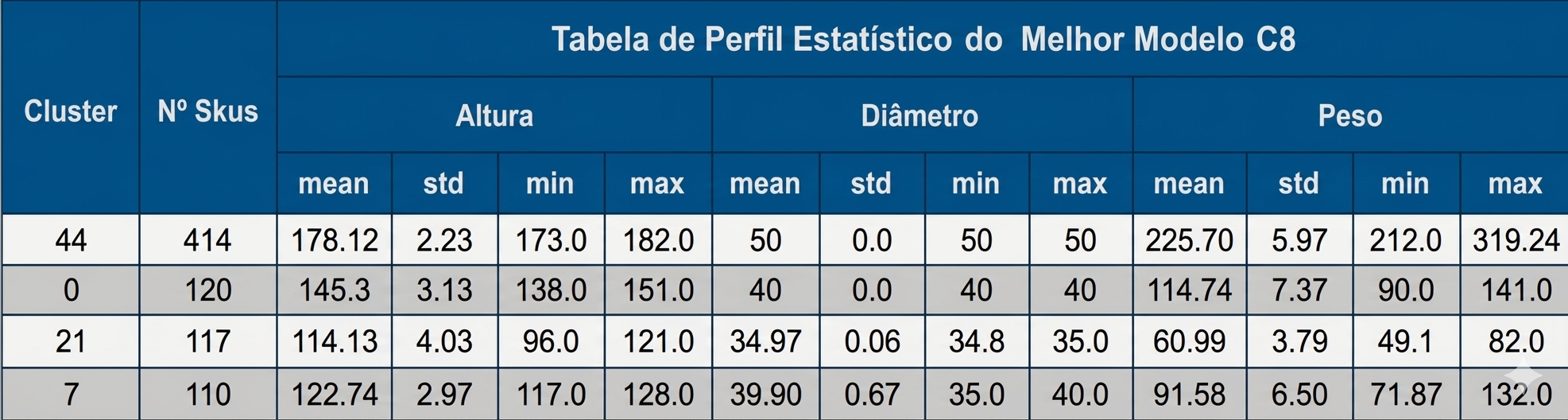
This project applies Unsupervised Machine Learning techniques to map and group a complex portfolio of over 2,000 tube SKUs, aiming to optimize production sequencing. The work addresses the critical challenge of reducing setup times and increasing production cadence by creating product families based on physical and technical characteristics (diameter, height, sealing types). The methodology involved a robust comparative analysis between K-Means algorithms, Hierarchical Clustering (Ward's Method) and Gaussian Mixture Models (GMM), ensuring that the groupings were technically consistent with the factory's operational reality.
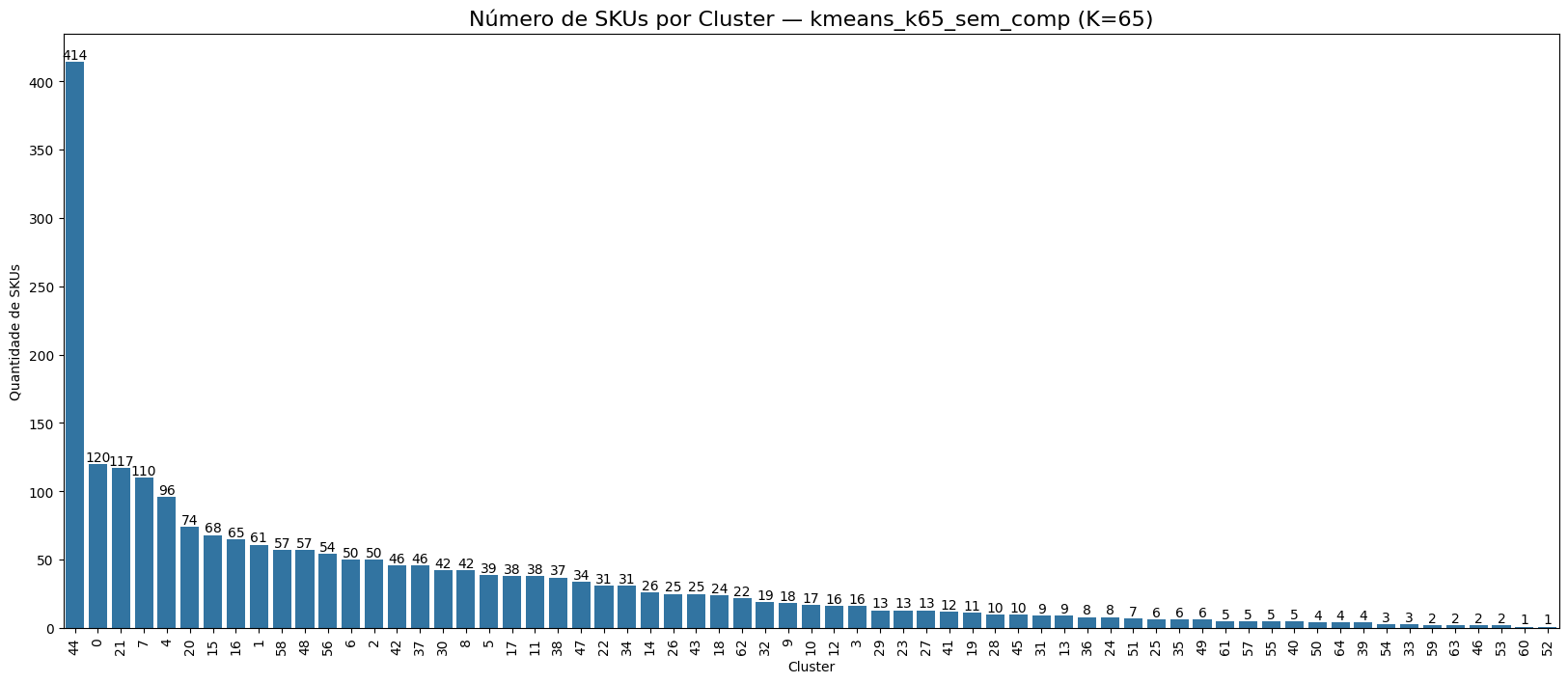
The implementation of the final model (K-Means with K=65) allowed the replacement of subjective sequencing criteria with statistical rigor that resulted in immediate operational gains. The optimization of the productive itineraries enabled the internalization of 7% of the volume that was previously outsourced, generating an estimated financial return of R$ 1.5 million in revenue. By grouping items with similar filling characteristics, the project maximized the OEE (Overall Equipment Effectiveness) and established a solid foundation for category management in the industrial environment.
Key Highlights
- Financial Impact: Feasibility of internalizing 7% of the outsourced volume, generating BRL 1.5 million in annual revenue.
- Multi-criteria Validation: Use of Silhouette Score and Davies-Bouldin to ensure the cohesion and statistical separation of the 65 clusters.
- Hierarchical Refinement: Application of the Mojena Method and Cophenetic Correlation for precise definition of cutoff points in the dendrogram.
- Feature Engineering: Strategic selection of technical features and removal of redundancies to increase the homogeneity of families.
- OEE Optimization: Reduction of setup times and increase in production cadence through family-based sequencing.
- Algorithm Benchmarking: Comparative analysis between K-Means, Hierarchical (Ward) and GMM to ensure model robustness in an industrial setting.